There is a particular kind of magic to sitting round a table with your friends, dice clattering, snacks within arm’s reach, and someone doing a terrible villain voice two feet from your face. Moving a game online does not erase that magic, but it does ask you to work a little harder for it. Some of it cannot be copied, but a surprising amount can be rebuilt, or at least brought close enough to feel familiar, and since I keep coming back to what online tables are still missing, and how to get it back, here are a few small rituals that I use and a few that I would love you to borrow.
Open the session before the session starts
I always start with a chat. How has everyone been? How was the last week, or the last couple of weeks, depending on how long it has been since we played? Only when everyone has arrived, settled and caught up with each other do I launch into the recap of the previous session and start the game.
There is always news. Some of it is personal, if people are happy to share it, and some of it is less personal, like what their characters have been up to in their other games. Plenty of people find the second kind easier than talking about work or home life, especially with friends they have technically never met in person. It is a gentle way to get everyone talking.
A little while ago three of us went to see Critical Role live at the O2 in London. We live in different parts of the country, but we managed to meet up for a laugh and a shared meal, and a few photos had gone round. When the next session came, it opened with everyone asking how it went, and we made the others extremely jealous.
None of that is the game, and all of it is the table. At a real table you get it for free while people arrive. Online, you have to make room for it on purpose.
Bring a few physical things to the digital table
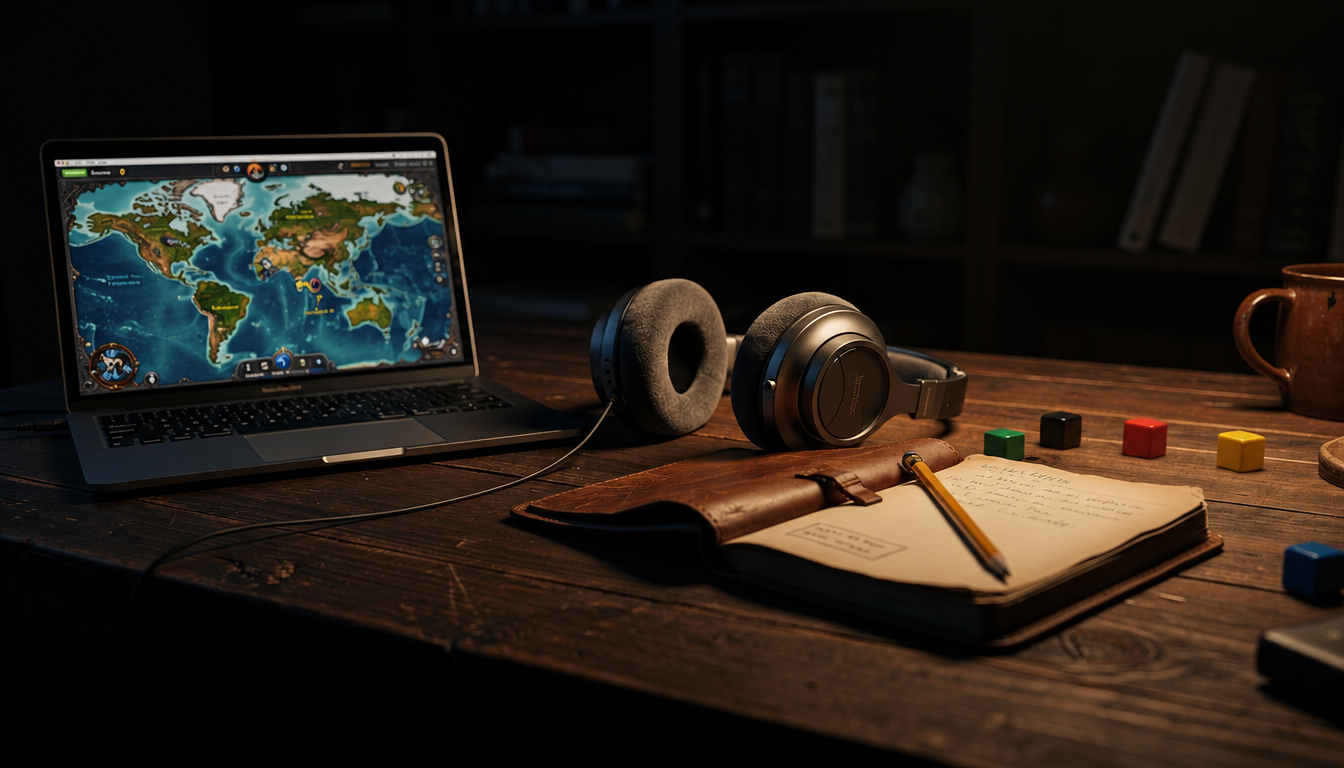
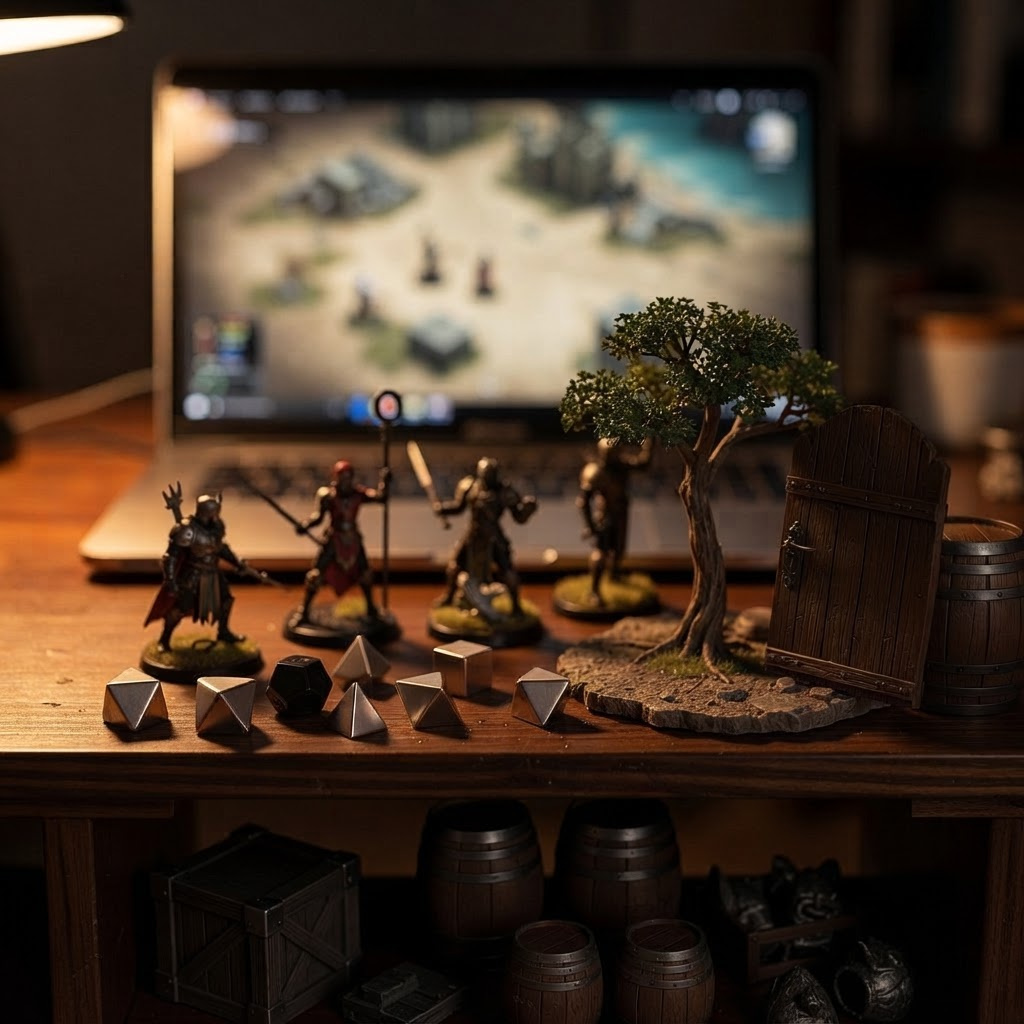
A real table is full of little physical things that do some of the work for you: a mini, a character sheet, a mug, a packet of snacks to munch on while someone else is talking. Online, nobody can hand you those, so here is what I keep within reach at mine.
I always have dice in my hands. I call it power charging: I roll them between my hands while I talk, hoping to fill them with good energy so that I roll high. I have no evidence that it works, and I do it anyway. I also keep a large mug of tea, because I need a sip between voicing characters, and because it helps me stop talking over my players, if I can manage it. And I keep pen and paper by the keyboard, because jotting a quick note is often faster than typing one.
If you run Foundry, there are also some lovely modules coming out that make handouts interactive, so a letter or a map feels like something you can hand to a player to look at, rather than something you have to describe. It is not quite sliding a prop across the table, but it is closer than it used to be.
Pay the GM tax, online edition
At a lot of real tables there is an unwritten rule that you bring snacks for the GM and hope they are kind to you in return. It is not the same everywhere, but it has been true at most of the tables I have played at. Online, you cannot pass a bag of biscuits through the screen, but you can still pay up, and a little bonding goes a long way.
- Give a full snack report. You cannot share your food, but you can describe it in loving detail while the GM sits there hungry and jealous. Suffering together counts as bonding.
- Tell them what you loved. After the session, send a message naming one moment that landed. GMs spend hours preparing, and hearing that it worked is worth more than a biscuit.
- Hand them something to play with. A backstory hook, a rumour your character has heard, a rival you would like to meet. A player who gives the GM material to work with is paying in the currency GMs value most.
- Bond with the rest of the table too. Chat between sessions, and check in as well. Be open and honest about what you want from the game, and make sure it is okay with the other players. Characters can get along perfectly while the players behind them are uncomfortable, so it is nice to check that everyone is still on the same page and having fun. It is mostly the GM’s job, but that does not stop you checking in too. The happier the table, the happier the GM, which is the real point of the tax.
Mark the small wins out loud
At a physical table, a great roll gets an instant reaction: a gasp, a high five, someone standing up. Online, that reaction can get lost.
One of my players has Dice So Nice set up with a special animation for a natural 20: a train runs round the screen and then heads straight for whoever is looking at it. It is dorky, it is silly, and everyone laughs when it happens. I used to have one for natural 1s that cracked my screen, as if the dice had taken it personally.
Even without the effects, call out the big moments as they happen. “That’s a nat twenty, everyone celebrate” takes two seconds, and it stops the table’s excitement from disappearing into individual living rooms.
Keep a closing ritual, not just an ending
At the end of a session I ask the party what they plan to do next time. I will admit it is partly sneaky, because it lets me get ahead of what they want so I can plan for it. But it also gets them talking to each other, and it is when they tell me, without my having to ask, what they liked and what they did not.
Online games can stop abruptly, because closing the laptop is so easy. A question to finish on is a small way to make the session feel like something that happened together, rather than a call that simply ended.
Roll your own dice
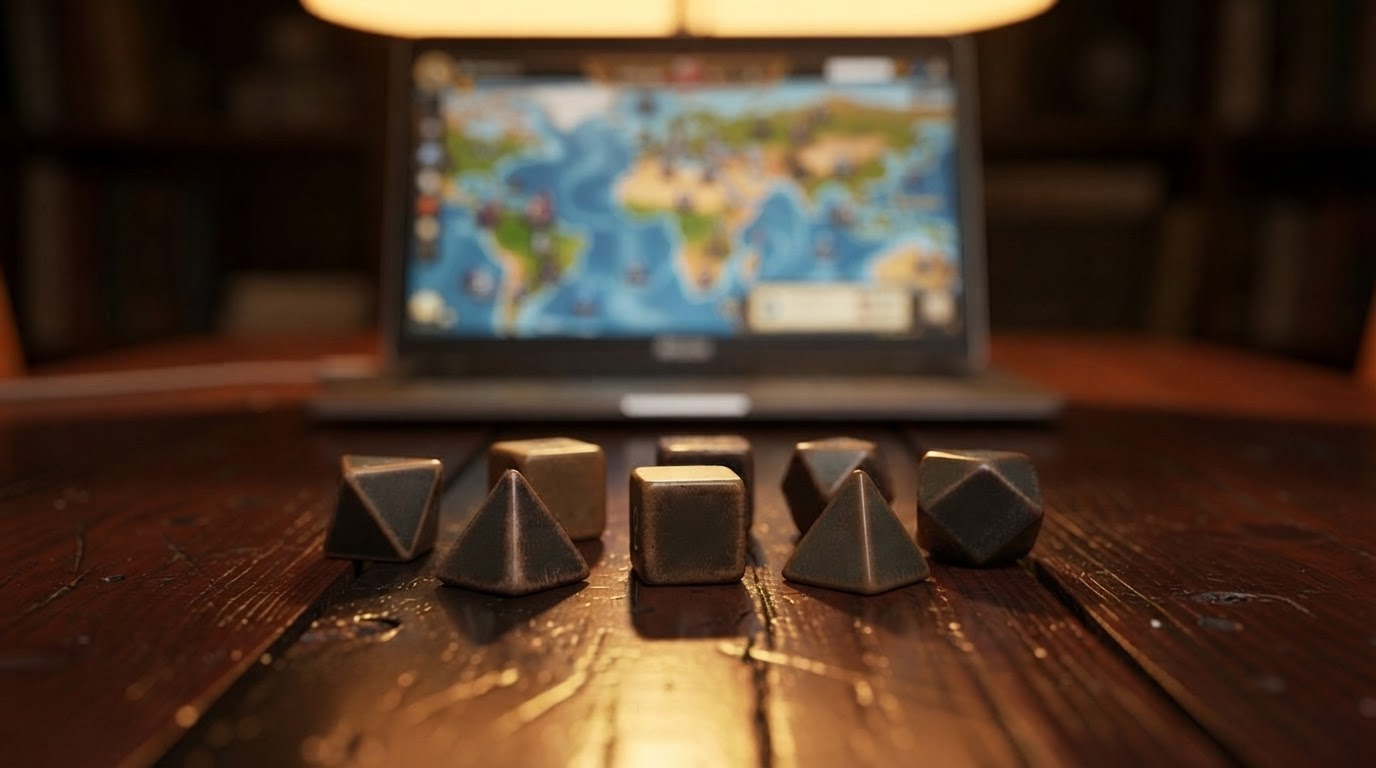
This is the one I care about most, because it is the ritual online tables lose first. Dice are rarely just numbers to the people who own them. They go to dice jail, or on timeout. Someone blows on them before a big roll. And there is the awkward moment of squinting at a die and wondering whether that is a 4 or a 20, which, annoyingly, is part of the fun. I have plenty of reasons for why your real dice still belong at a digital table, and the ritual is the biggest one.
The good news is that bringing it back is no longer hard. There are now several tools that let you roll your real dice and have the result land in your virtual tabletop, and it is actually quite easy. That is what we are building Dice Link to do, and we are a few months from launch. Once your dice tray is set up, you pick up your dice and roll. Then you check that Dice Link has picked up the right number. If it is not sure, it asks you to confirm, and you can correct it if it has got it wrong. Then the result goes to your virtual tabletop. At worst that takes about five seconds, and at best it is instant, depending on how confident Dice Link is. We are still improving it, and every roll we make right now helps train it. No promises, but it is already very close to where we want it to be.
And if rolling real dice is not for you, you can still watch your dice land. Foundry has Dice So Nice, D&D Beyond has 3D dice, Roll20 has 3D dice you can switch on in your settings, Fantasy Grounds has a 3D dice tray with three basic sets included for free, and Owlbear Rodeo has its own 3D dice extension. A computer is still picking the number, but you get the tumble, the pause and the groan.
None of this needs to be dramatic. The rituals that make a table feel like your table are small, slightly silly and repeated every week, and the dice are the part I would least want to lose. If you would like to hear when Dice Link is ready, join the mailing list: https://realmbridge.co.uk/dice-link/
If you have something to add to this, come along and join the conversation over on Discord.