I started playing tabletop games back when you had to find people willing to sit around a table with you, because computers were big machines that mostly lived in offices. These days most of my games are online, and I wouldn’t swap that. It fits the schedules and distances that real life throws at a group, and for a lot of tables it’s the only way the game happens at all.
But every GM who plays online has heard some version of the same line, usually from someone who has played both ways: “it’s great, but it’s not quite the same.” Not long ago, a GM running one of the big virtual tabletops asked their own community what they love about playing online, what they hate, and what they feel is missing. It’s a brave question to put to your own players, so here’s my answer.
The high five
The moment I miss most is the end of a big fight. The party finally takes down the big bad of the arc, or of the one-shot, and everyone looks around the table at their friends and high fives. We did it. Online you can cheer down a microphone, and that’s lovely, but you can’t turn to the person next to you and slap their hand.
The ritual of the roll
The other thing I miss is the ritual. You pick the perfect die. You roll it around in your hands, have a quiet word with it to make sure it behaves, and let it go. Then you watch it wobble, teetering between a 14, an 8 and a 2, until it finally settles on a 20. That crit might half kill the big bad, or save a friend, and the whole table leans in to watch it happen.
Even the build-up is half the fun. “I just need a 13, give me a 13”, and your friends cheer your die on, and somebody jokes about sacrificing a few extra chickens to the dice gods before an important roll. It won’t change a thing, and we all know it, which is rather the point. The nat ones are brilliant in their own painful way too.
Online, a number just appears.
Seeing is believing
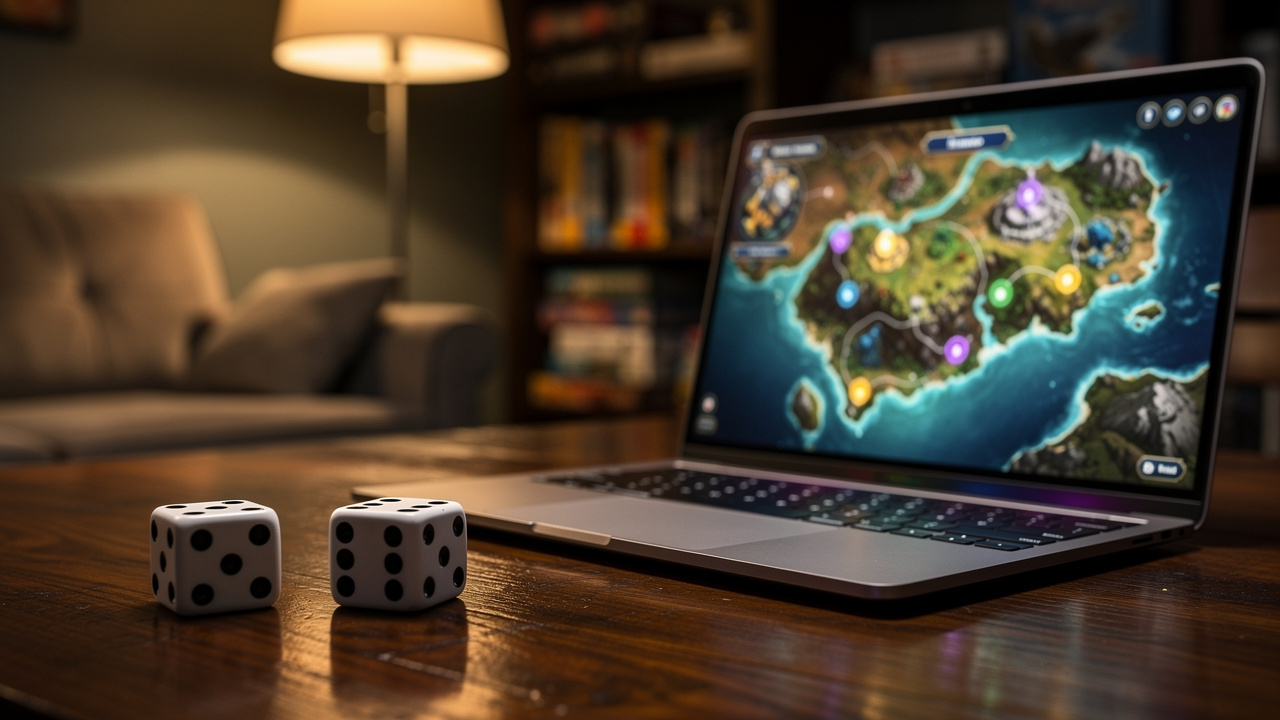
I’ve tried pointing a random camera at my dice, but until recently there was no way to show people I’d rolled a 20 beyond taking a photo. And there will always be a sceptic who says you just put the die on the 20 and took a picture.
That’s exactly what we’re building Dice Link to do away with. The idea is simple: here’s my die rolling, and here’s the 20 I just rolled, in front of you, as if we were all around the table. The prototype works, and we’re still working on it, so I won’t promise any dates, but that feeling is the one we’re chasing.
It matters more than it sounds, because trust works differently online. Around a table you’re usually with friends or family you already trust. Online you’re often playing with people you’ve only just met, and that trust takes time to build. Watching a roll genuinely happen helps.
Pace
Pace is the other big one. A fight that takes thirty minutes around a table can easily take upwards of an hour on a VTT, which makes one-shots particularly tricky.
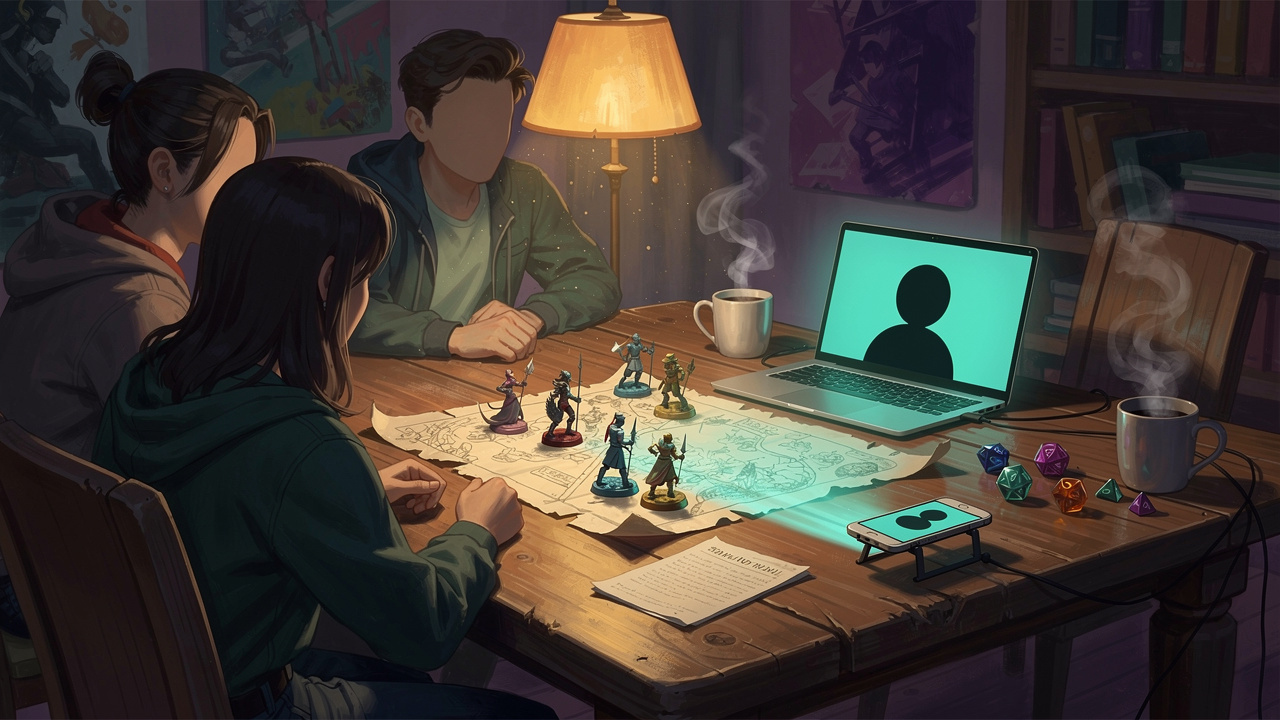
Part of it is talking. Around a table you can look at each other, say “do you want to try that?”, and even talk over each other without it turning into a mess. Online, if everyone speaks at once you can’t tell by looking who’s talking, so in combat people tend to stay quiet and keep their ideas to themselves. That’s good and bad. It’s tidier, but it’s slower, and a bit less fun. Then there’s the waiting while the software does its thing, which is sometimes instant and sometimes isn’t.
To be fair, the software gives plenty back as well. Having my VTT add up the eight d6 for a fireball is far faster than me doing it, and I’m rubbish at maths. So I don’t think the answer is dragging everything back to the table. It’s working out which bits of the in-person feel are worth fighting for.
Two small changes to try this week
You don’t need a big setup overhaul. Here are two things to try.
Add some music. If you’ve never played with music, try it. There are plenty of places to get music and soundscapes for your games, such as Syrinscape, Tabletop Audio and Michael Ghelfi Studios. Most of the really good stuff costs something, whether that’s a subscription or paid packs, so have a look at what each one offers and what it costs before you commit. Either way, music sets the theme and the scene. It won’t always behave, mind. The track doesn’t start when you want it to, or the trap you tested to death fizzles the moment it’s in a real session. Laugh, carry on, and try again next time.
Actually hand things over. When an NPC gives the party a piece of lore, an item or a clue, make a handout for it and give it to them. Share the file or put it up on screen. Don’t describe the letter, let them read it. Don’t describe the face of the missing person, let the NPC say “here’s a picture of him” and put it in front of them. That’s what would happen at a real table, and it gives your players something to do.
You might not miss what you haven’t had
Do players who have only ever played online even notice the gap? Last year I GMed a game for my business partner, Mike, with two friends at the table. It was Mike’s first face to face game, and he’d only ever played online. On the way home he kept telling me how much more fun it was than playing online. He couldn’t quite say why. It was a feeling more than anything he could point at. But he wants to do it again as soon as possible.
So I suspect the gap goes unnoticed until you’ve sat around a table once. And for those of us who learned in person and now play online because it suits our schedules or where we live, we know exactly what’s missing, and we want to bring a bit of it back.
It’s never going to be one single thing. It’s the high five, the ritual, the pace and the trust, and most of them can be partly won back once you know which one you’re chasing.
If you’d like to see real dice rolling live onto a digital table, join the Dice Link mailing list and we’ll let you know as the beta gets closer: https://realmbridge.co.uk/dice-link/
If you have something to add to this, come along and join the conversation over on Discord.